

Why WordPress Agencies Are Quietly Starting to Use AI Agents
Nobody at the agency conference mentioned AI agents. The panels covered client acquisition, pricing strategies, and project management tools. Nothing about automation beyond the usual “we use ManageWP for monitoring” line.
But when we checked our signup data, 40% of new vLake accounts in the last quarter were agencies. Not solo freelancers. Agencies with 5 to 30 client sites. They signed up, connected their sites, and started using the system without talking about it publicly.
That gap between public silence and private adoption tells us something interesting.
The Economics Nobody Argues With
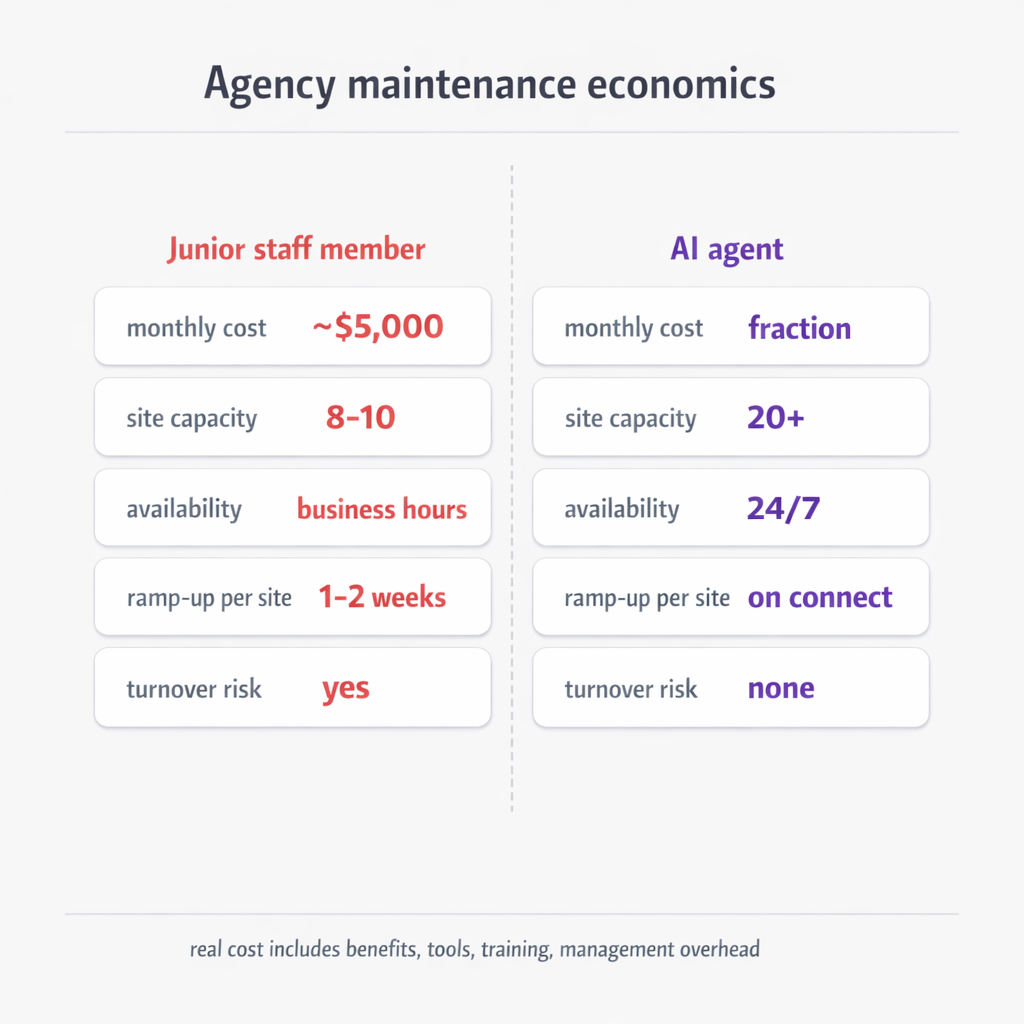
The math is what convinces agencies. Not the technology, not the features, not the demo. The math.
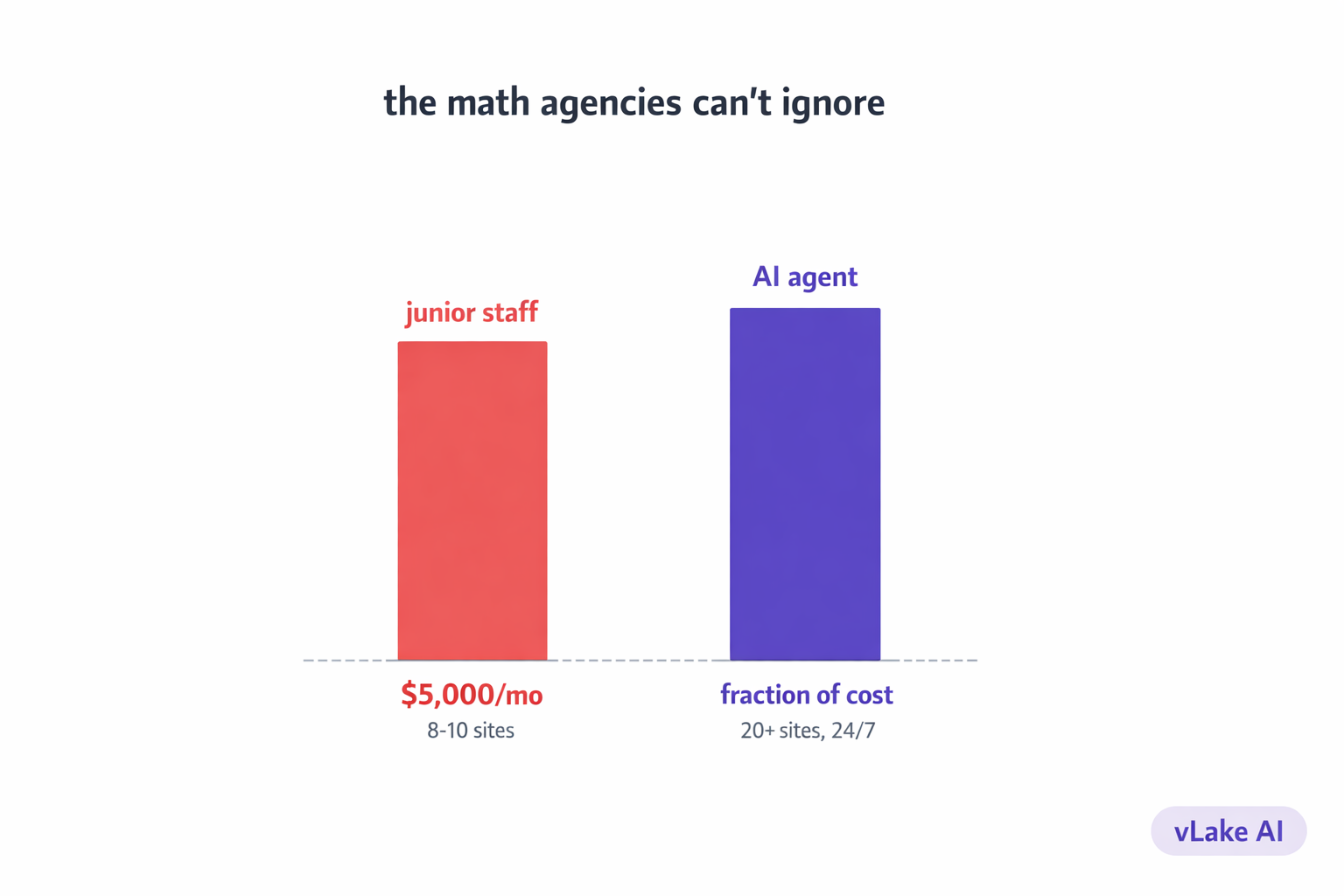
A junior WordPress manager costs $3,000 to $4,000 per month in salary alone. Add benefits, tools, training, and management overhead, and the real cost is closer to $5,000. That person can effectively manage 8 to 10 sites. They work during business hours. They take vacations. They get sick. They quit and take institutional knowledge with them.
An AI agent connected to 20 sites costs a fraction of that monthly. It runs 24/7. It does not take time off. It does not need training on each new client because the scanner learns the site on connection. It does not quit.
This is not a pitch. It is just the math. When an agency owner looks at those two columns side by side, the question stops being “should we try this” and becomes “how fast can we set it up.”
The agencies that are signing up are not experimenting. They are calculating.
What Agencies Are Actually Using It For
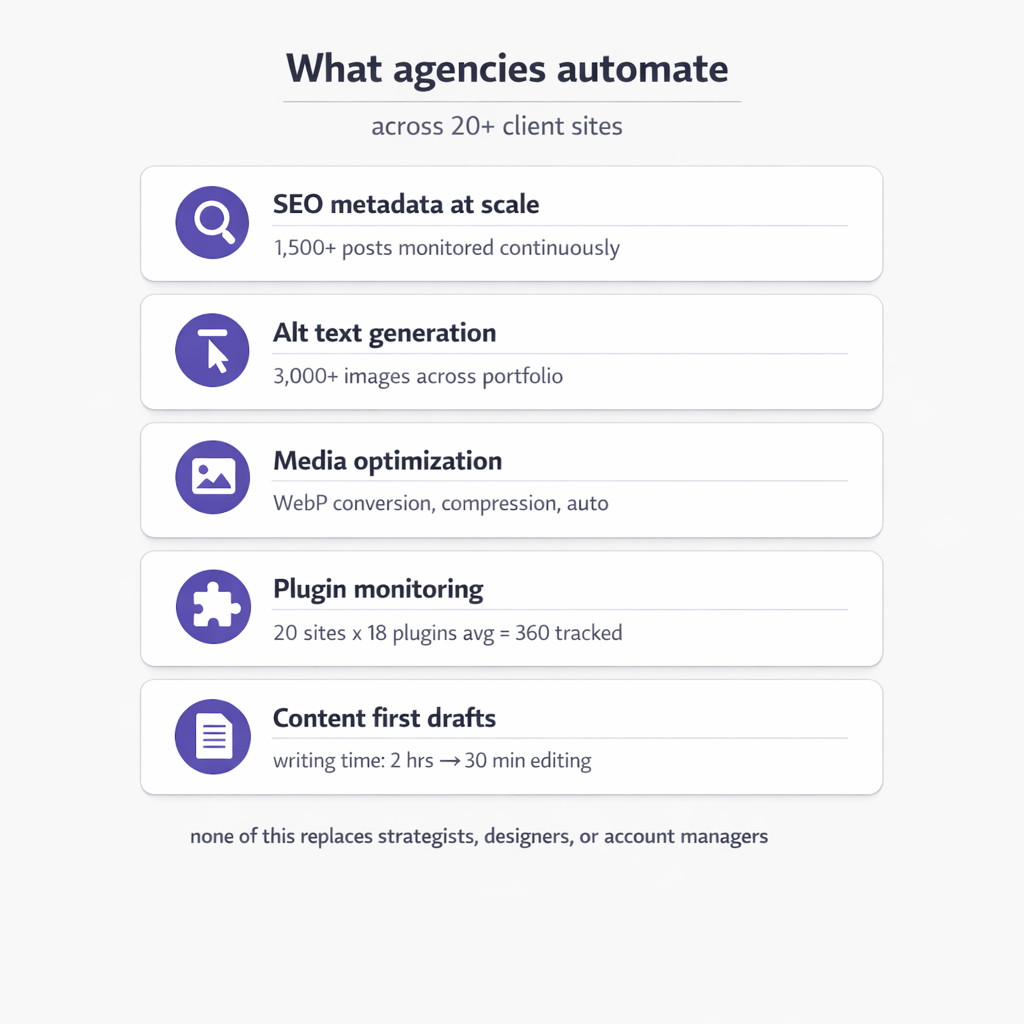
The misconception is that AI agents replace writers and designers. That is not what we see in the data.
Agencies use vLake for the volume work. The tasks that eat hours but require no creative judgment:
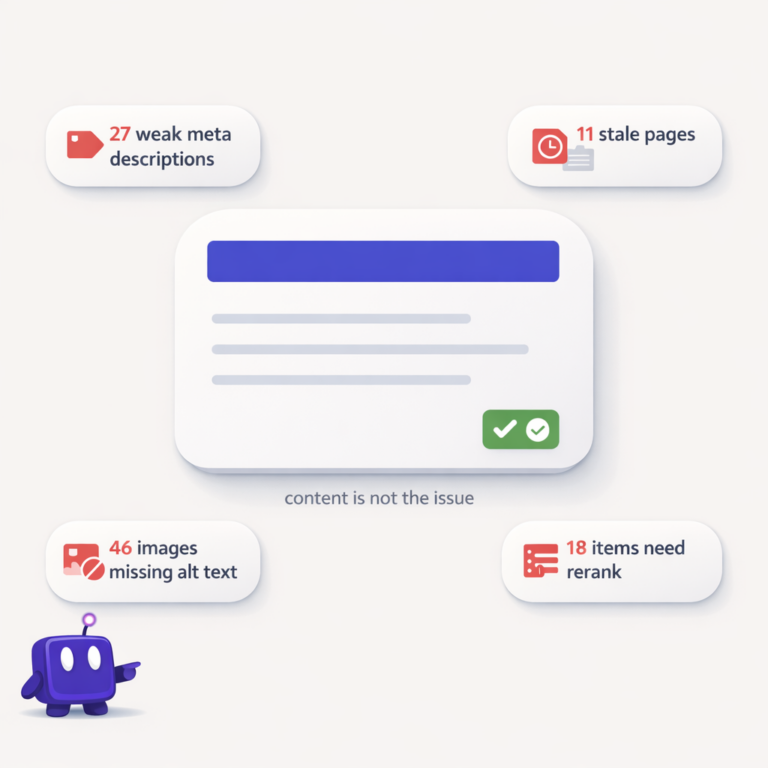
- SEO metadata at scale. When you manage 25 client sites with an average of 60 published posts each, that is 1,500 pieces of content that need SEO monitoring. Meta titles, descriptions, focus keywords, structured data. A human cannot audit 1,500 posts regularly. A scanner does it continuously.
- Alt text across hundreds of images. Most agency client sites have 100 to 300 images with incomplete or missing alt text. Nobody has time to write alt text for 3,000 images across a portfolio. The agent generates contextual alt text per image and queues it for review.
- Media optimization. Oversized images are the most common performance issue across client sites. The agent flags and converts them to WebP automatically. No manual Photoshop work per image.
- Plugin monitoring. Keeping 20 sites up to date on plugin versions is a full-time job on its own. The agent tracks update status and flags security-relevant updates.
- Content first drafts. For agencies that deliver blog content as part of their retainer, the AI handles first drafts. The agency team reviews, edits for voice, and publishes. The writing time per post drops from 2 hours to 30 minutes of editing.
None of this replaces the strategist, the designer, or the account manager. It replaces the spreadsheet work, the manual audits, and the repetitive execution that burns out junior staff.
The Quiet Part
Here is why agencies do not talk about this publicly: optics.
Clients pay agencies to manage their WordPress sites. The implicit promise is “a team of humans is looking after your site.” When an agency says “we use an AI agent for routine maintenance,” some clients hear “you are paying us to let a robot do the work.”
That framing is wrong, but it is how it lands if you lead with the tool instead of the outcome. The reality is that the client gets better service. Faster turnaround. More consistent output. Fewer things falling through the cracks. The humans at the agency spend more time on strategy, creative work, and client relationships instead of grinding through SEO audits.
But the messaging is delicate. Most agencies we work with position it as “our proprietary systems” or “our internal automation platform.” They do not name the tool. They do not explain how it works. They just deliver better results and let the results speak.
This is not deception. Every agency uses tools. Nobody names their project management software in a client pitch. The AI agent is another tool in the stack. The difference is that this one handles work that used to require headcount, and that feels different to explain.
Over time, we expect this will normalize. The same way agencies stopped explaining that they use Google Analytics or Ahrefs. For now, the adoption is real. The conversation about it is still catching up.
What Changes for the Client
The client does not see the tool. They see the output.
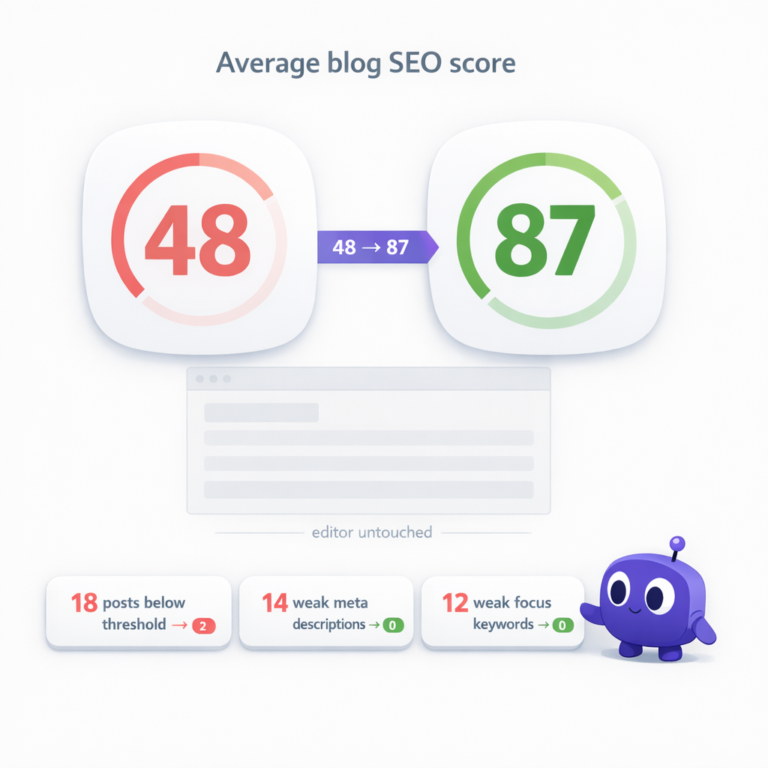
The blog posts arrive on time or ahead of schedule instead of a few days late. The SEO scores across their site stay consistently above 75 instead of drifting between audits. Their page speed stays fast because media issues get caught immediately. Plugin updates happen within a week of release instead of accumulating for a month.
The monthly report looks better. The retainer feels worth the money. The client renews.
That is what we see in the data. Agencies using AI agents have higher client retention. Not because the tool is visible to clients, but because the output quality and consistency go up when the maintenance layer is automated.
The agencies that figure this out first have a structural advantage. They can take on more clients without proportionally increasing headcount. They can deliver more per retainer dollar. And they can spend their human hours on the work that actually differentiates them from the agency down the street.