

How I Manage WordPress Content for 12 Client Sites Without Burning Out
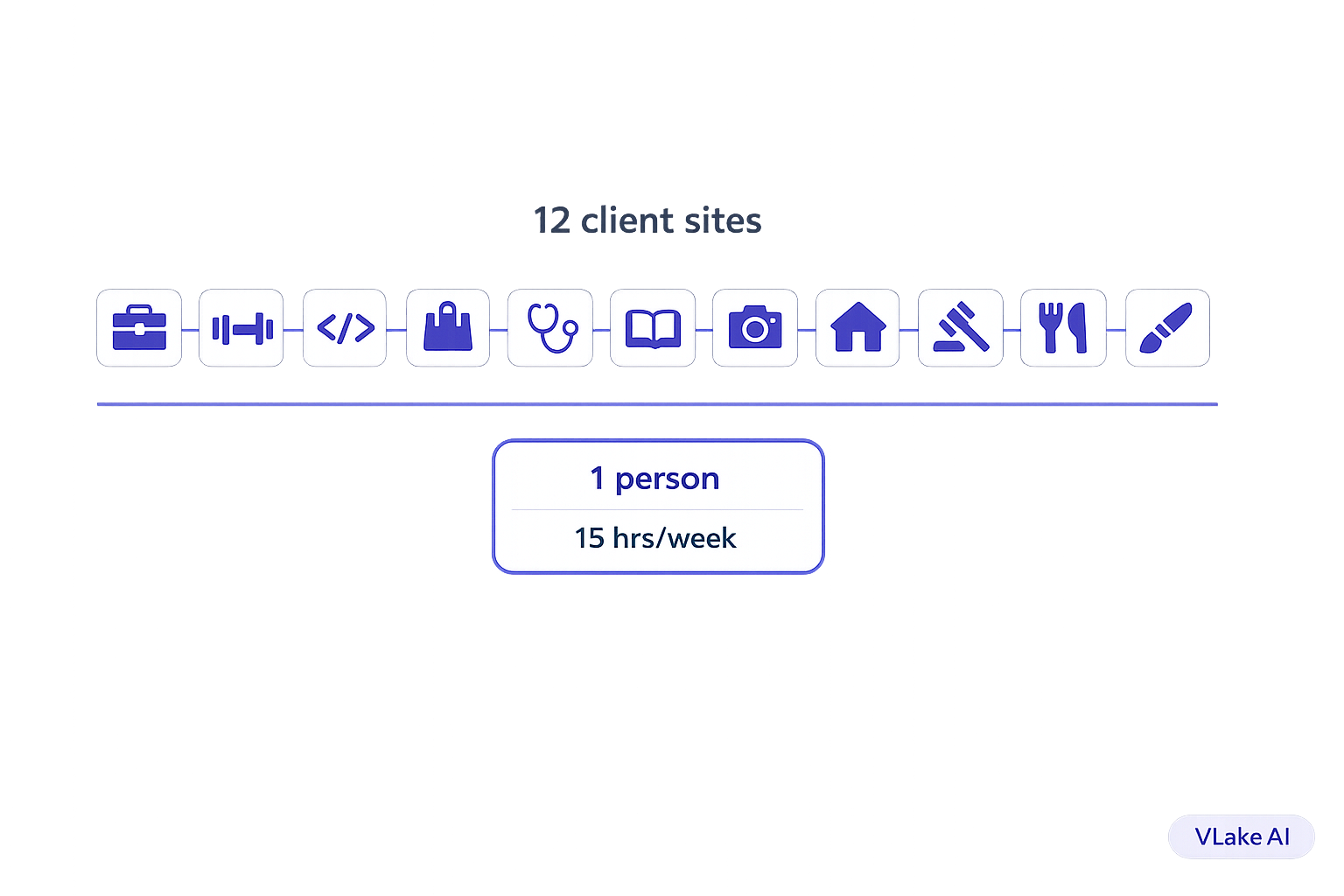
I manage content for 12 client WordPress sites. A year ago, I was working 60-hour weeks and still falling behind on at least three of them at any given time. Deadlines slipped. SEO audits got pushed. Media libraries grew unchecked. I was exhausted and my clients could tell.
Now I handle all 12 in about 15 hours a week. Same clients. Same deliverables. Better output. The difference is not working harder or hiring staff. The difference is a system.
What 12 Sites Actually Means
People hear “12 sites” and think it means 12 WordPress dashboards. It means a lot more than that.
Each site needs regular blog content. Most clients want 2 to 4 posts per month. That is 24 to 48 blog posts I need to produce, format, optimize, and publish every month across all sites.
Each site needs SEO monitoring. Meta titles, descriptions, focus keywords, alt text, structured data. When content changes, SEO scores shift. Someone needs to catch that and fix it.
Each site needs media management. Images get uploaded without compression. Alt text gets skipped. File sizes bloat. Page speed drops. Nobody notices until rankings slip.
Each site needs plugin maintenance. Updates, compatibility checks, security patches. Twelve sites with an average of 18 plugins each means 216 plugins to keep an eye on.
And each site has its own taxonomy, its own categories, its own content strategy, its own client voice. Switching context between a law firm’s blog and a fitness brand’s blog and a SaaS company’s blog takes mental energy that adds up fast.
Before the system, I was spending about 5 hours per site per week. That is 60 hours. The math does not work for one person.
What My Week Looked Like Before
Monday was supposed to be Site A and Site B. Write two blog posts, run SEO checks, review the media library. By noon I was still on Site A because the SEO audit turned up 14 items that needed fixing.
Tuesday was Sites C through E. Plugin updates on all three. One update broke a page layout on Site C and I spent two hours debugging. Sites D and E did not get touched.
Wednesday was content day for Sites F through H. Draft three blog posts. But Site F’s client sent revision notes on last week’s post, and Site G needed urgent media optimization because their page speed score dropped below 40.
By Thursday I was behind on four sites. Friday was catch-up. The weekend was more catch-up. Monday started the cycle again.
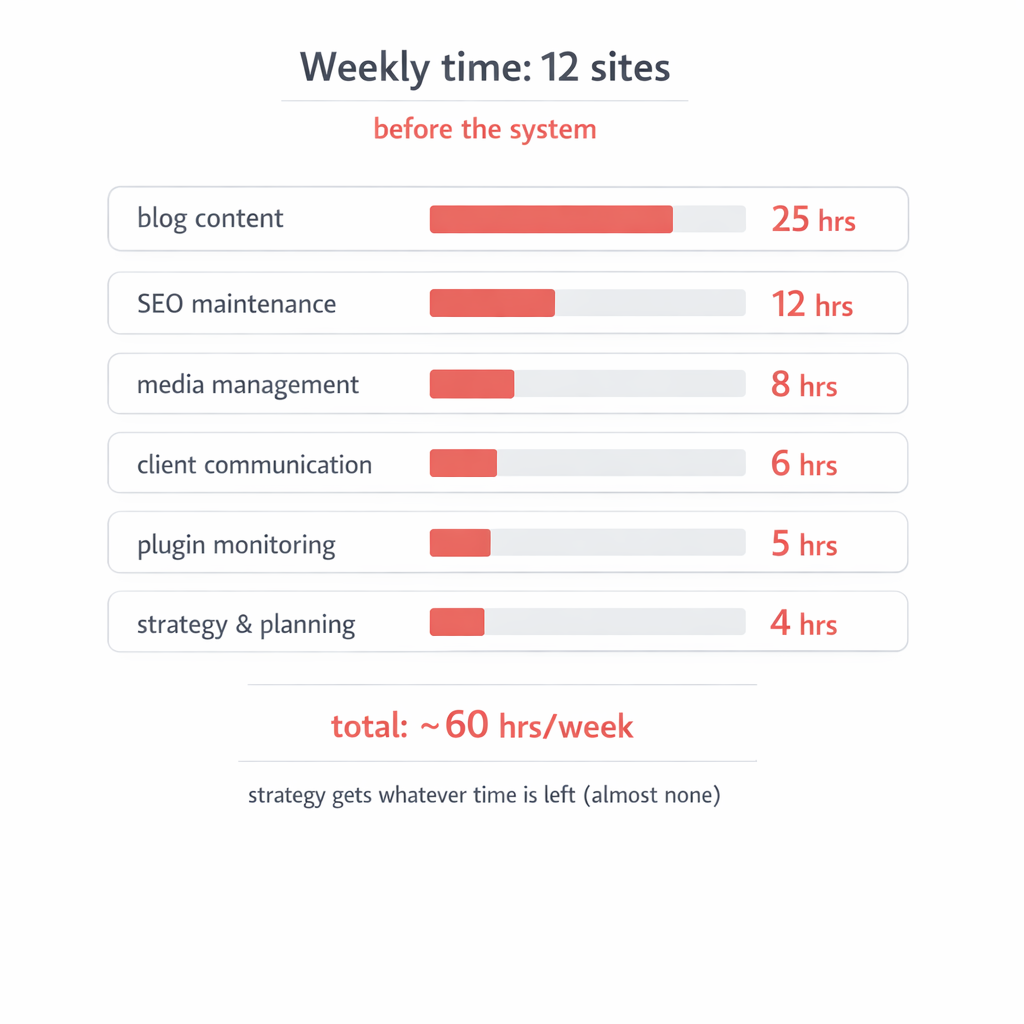
The breakdown across all 12 sites looked roughly like this:
- Blog content: 25 hours/week (writing, editing, formatting, uploading)
- SEO maintenance: 12 hours/week (audits, metadata fixes, score monitoring)
- Media management: 8 hours/week (compression, alt text, format conversion)
- Plugin monitoring: 5 hours/week (updates, compatibility, troubleshooting)
- Client communication: 6 hours/week (calls, emails, revisions)
- Strategy and planning: 4 hours/week (what was left)
Total: roughly 60 hours. Strategy and planning got whatever time was left after everything else, which was almost none. The creative, high-value work was permanently squeezed by maintenance.
The System Now
I connected all 12 sites to vLake. Each site has its own recommendation queue on the workflow board. The scanner runs continuously across all sites, flagging SEO gaps, media issues, plugin statuses, and content opportunities.
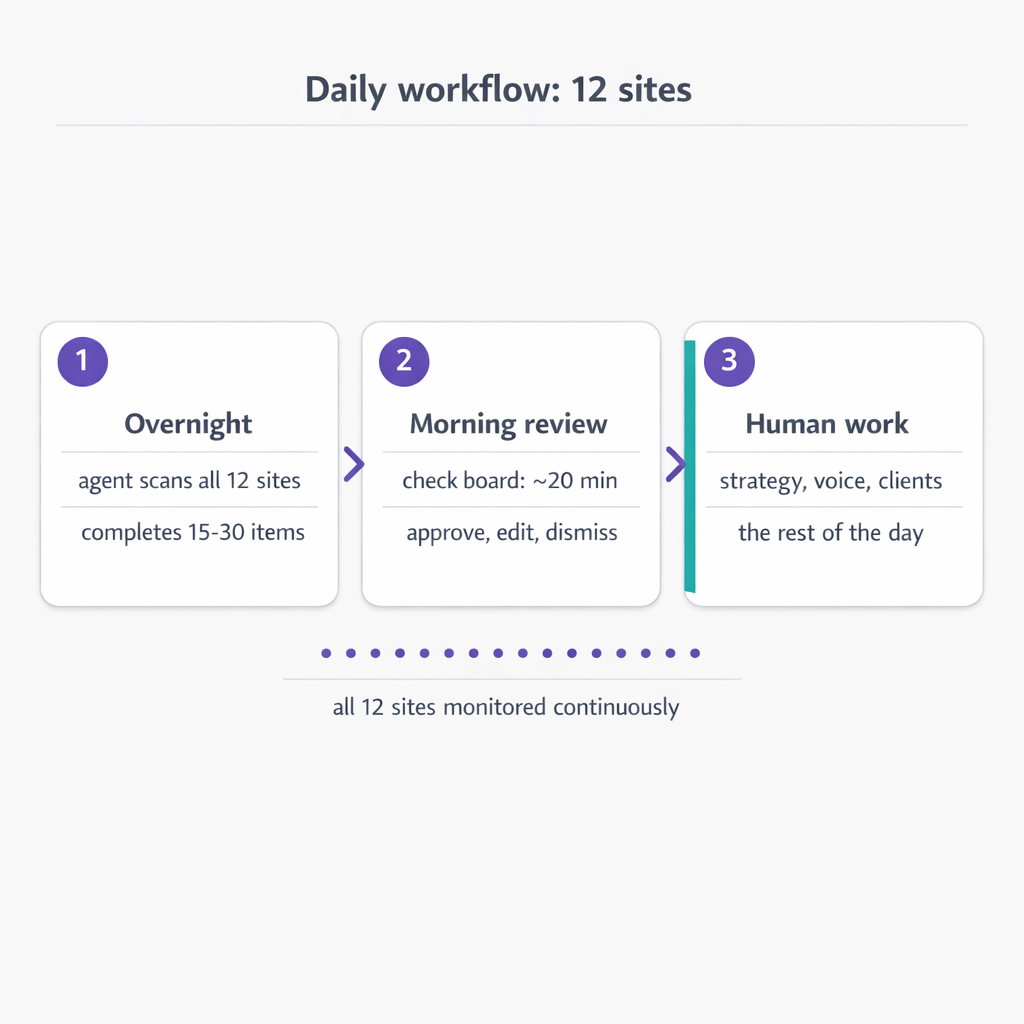
My morning routine takes about 20 minutes. I open the board and see everything across all 12 sites in one view. Overnight, the agent completed 15 to 30 items: alt text generated, images compressed, SEO metadata written, plugin status checks done. Another 10 to 20 items are waiting for my review.
I review the batch. Check the AI-generated blog drafts against each client’s voice. Spot-check alt text. Approve SEO metadata. Dismiss anything that does not fit. This takes about 30 to 45 minutes.
Then I spend the rest of my work time on the things that actually need a human. Client strategy calls. Brand voice refinement. Content planning for next month. Reviewing generated content for tone and accuracy. Creative direction.
Each site gets continuous attention instead of a weekly sprint. Nothing sits untouched for days because the scanner catches issues as they appear, not when I get around to checking.
The Numbers
Here is what changed over three months after switching to the system:
| Metric | Before | After |
|---|---|---|
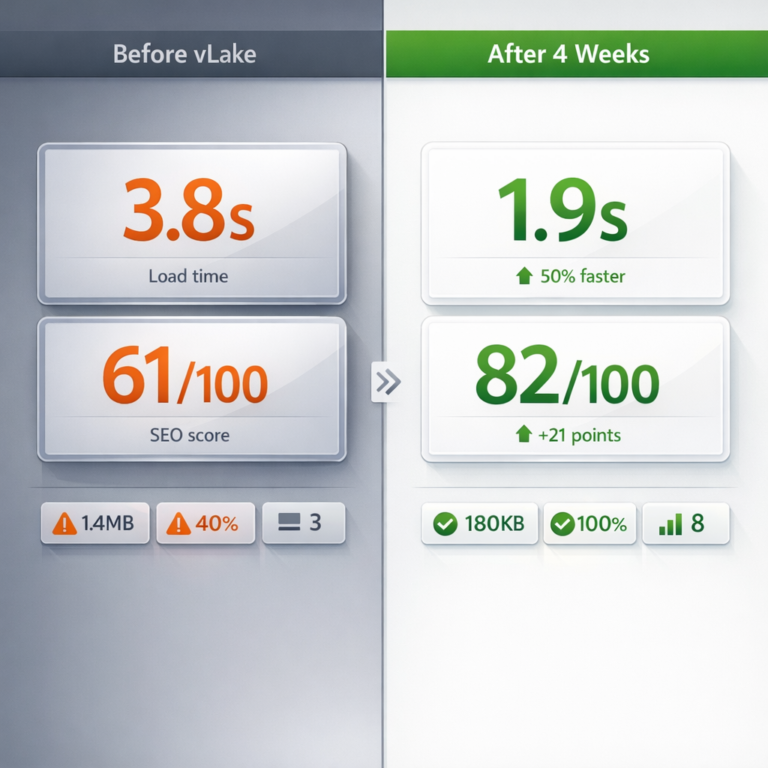
| Hours per week (total) | ~60 | ~15 |
| Sites behind schedule | 3-4 at any time | 0 |
| Blog posts delivered/month | 28 | 42 |
| Average client SEO score | 54 | 79 |
| Media issues per site (avg) | 23 unresolved | 2 pending review |
| Plugin update lag (avg) | 18 days | 5 days |
| Strategy hours per week | ~4 | ~8 |
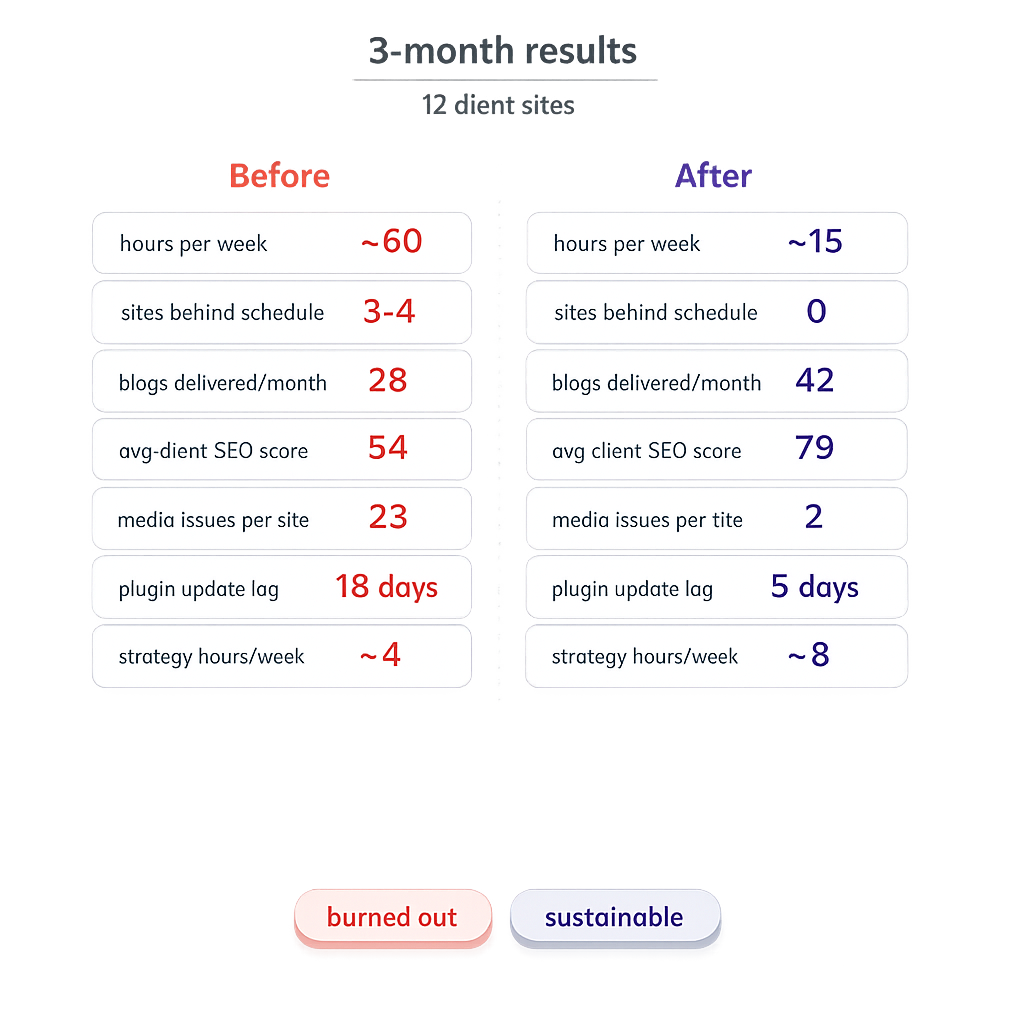
The blog output went up because the AI handles first drafts and formatting. I spend my time on editing and voice, not on the blank page. The SEO scores went up because monitoring is continuous, not periodic. Media issues stay near zero because the scanner catches new uploads immediately.
The strategy hours doubled. That is the number I care about most. Strategy is what keeps clients long-term. Maintenance is what burns you out.
What I Still Do Myself
The system handles execution. I handle judgment.
Client calls are mine. Understanding what a client needs, translating that into content strategy, managing expectations, building the relationship. No AI does that.
Brand voice is mine. Every client sounds different. The AI generates content, but I review every piece against the client’s voice before it goes live. Some clients need formal and authoritative. Others need casual and direct. I am the quality filter.
Creative direction is mine. Deciding what topics to cover, how to position a client’s expertise, when to pivot the content strategy based on results. That requires context an AI does not have.
Approval is mine. Nothing goes live on any client site without my review. The workflow board makes this fast, but the human checkpoint is non-negotiable.
The system did not replace me. It replaced the 45 hours of repetitive work that was preventing me from doing the work I am actually good at.